

Some Weed Influencers to follow

I’m just gonna piggyback off of another article today, but there’s some good content here.
CannaTechToday put together a list of some Weed influencers who are coming at the subject from different perspectives and tastes. It’s pretty cool!

With over 170K followers, this 23-year-old Orange County native is a fan favorite on TikTok, where she posts daily hilarious videos involving cannabis.
Sativadiva1997 has gained a massive following due to her weekly videos, called Baked Takes, where she gets high and evaluates different popular movie characters and how they would react in hypothetical situations.
For example, in her latest Baked Takes, the TikTok influencer evaluated Shrek characters based on whether or not she thinks they would be able to obtain a driver’s licence in California.
These out-of-the-box scenarios make you wonder, “how did she come with this?” and quickly click follow.

This cannabis influencer has a whopping 27.1K followers on Instagram, where she lives up to her title as,“Thee Vibe Queen,” by posting fun weed content promoting cannabis brands and other creators.
@shadesofsyd, real name Sydni Smiley, also created the Medicated Melanin (@medicatedmelanin), where she sells her highly sought after hemp lip gloss, which she even created a music video for.

Morgan Leigh English, widely known as @thiscannabislife on Instagram, is also the founder of Stoned +Toned, which are a series of virtual cannabis workout videos made specifically for the 420-friendly fitness community.
@thiscannabislife is perfect for those who love to pair weed with exercise, and her glamorous photographs of her daily life aren’t too bad to look at either!

Alice Moon is an innovative thinker, whose cannabis insights have been featured in the likes of High Times, LA Weekly, Civilized, and she appeared in Viceland’s Bong Appetit.
Moon gained widespread acclaim when she created the 2017 app Swallow, which guided customers on finding the right edible based on dietary restrictions.
Moon’s Instagram is light and bubbly, but also dives deep into more serious topics, such as the nausea-inducing Cannabinoid Hyperemesis Syndrome, which she was diagnosed with in 2018.
For more information on the condition, follow her instagram dedicated to the subject: @cannabinoid.hyperemesis

You’re not a true Floridian until you’ve visited @muv.fl.
Marina Mikkelsen is the Assistant Director of Cultivation at Muv Florida Dispensaries, and was even featured in the November 2020 @highlifemagazines Women in Cannabis issue.
Want your feed to look a little more green?
Mikkelsen’s instagram features dozens of gorgeous photographs detailing the different strains of cannabis offered at Muv during cultivation.
This account will make you want to plan your next trip to your local dispensary.

Hayley420 has over 851K subscribers on her YouTube channel, and once you start watching her addictive, unique video content, you’ll soon understand why.
Hayley uses her YouTube to review cannabis strains, partake in fun weed challenges, such as smoking a $300 blunt, and even hitting a bong made out of Starburst candy.
Hayley is the adventurous weed influencer we all aspire to be.
Smoking in an active volcano?
She’s been there, done that, and there’s already a video about it.

Marijuana for sleep jumped 635% during pandemic

Let’s face it, being stuck inside with a lack of scenery changes makes it a whole lot harder to switch off at the end of the day. We’re all dealing with it to some extent, and lots of us seem to have turned to marijuana to fix that difficulty.
According to a report by Ganja Goddess, a delivery platform, cannabis products that have marketed specifically for sleep have jumped 635%. Now this is a very vague descriptor because it can detail anything from CBD oils to actual marijuana flower, but still, that’s a remarkable jump.
The science behind marijuana helping sleep is very disputed. Many in the sleep field, including Matthew Walker, author of the bestselling book Why We Sleep, argues that due to its suppression of the REM (rapid eye movement) stage, marijuana causes a less restful sleep. Of course, this is ideal for those trying to prevent habitual nightmares or PTSD bouts, but those who don’t suffer from these issues could be delivering a less restful sleep, despite it being easier to doze off at first.
Ganja Goddess also found a 275% increase in revenue on April 20 of last year (4/20) and a 200% increase on Cyber Monday.
Read the original story at Ganjapreneur.

Study: Enactment of Marijuana Legalization Laws Associated with Reductions in Opioid Prescribing Patterns

“[T]he implementation of medical marijuana laws (MMLs) and recreational marijuana laws (RMLs) reduced morphine milligram equivalents per enrollee by seven percent and 13 percent, respectively.”
The post Study: Enactment of Marijuana Legalization Laws Associated with Reductions in Opioid Prescribing Patterns appeared first on NORML.

AG Nominee: Interfering in States with Legal Marijuana Not a Good Use of Justice Department Resources

“It does not seem to me useful the use of limited resources that we have to be pursuing prosecutions in states that have legalized and are regulating the use of marijuana, either medically or otherwise.”
The post AG Nominee: Interfering in States with Legal Marijuana Not a Good Use of Justice Department Resources appeared first on NORML.

Study: Cannabis Mitigates Symptoms in Patients with Treatment-Resistant Fibromyalgia

“The current study revealed the positive effects of MC [medical cannabis] therapy in some patients with FMS [ fibromyalgia syndrome] and resistance to conventional treatment. Thus, cannabinoids may be considered for FMS treatment.”
The post Study: Cannabis Mitigates Symptoms in Patients with Treatment-Resistant Fibromyalgia appeared first on NORML.

Why do we call marijuana “weed”?

It’s definitely a fun little exercise to go through the list of cannabis nicknames we’ve all accrued in our lexicon, and right at the front of that list is “weed”. The most stigmatized, loaded, meaning-drenched of the nicknames. It means something different to everyone.
Well a nice little article over at Greenstate dives into some of the titles, and where they came from. Although not the most thoroughly researched, it still has some nuggets (another one!) of interest.

“[Weed] was first listed as one of the “new words” for cannabis in the 1929 edition of “American Speech.” At the time, there were only two widely-used terms for marijuana in the U.S. – the English term, “hemp,” and the scientific word, “cannabis” – so canna-lovers were experimenting with new names to avoid being discovered.
The nickname “weed” didn’t exactly hit at first – mostly because the more exotic term “marijuana” infiltrated the American lexicon in the ‘30’s. It wasn’t until the early 2000’s that it really became popular, according to Google search records. Some speculate this is because millennials needed an alternative to their parent’s hippie nicknames, like “grass” and “flower.””

Kind of an ingenious way to get the authorities to lose interest–who cares about some random weed the kids are gushing over.
Another fascinating one in the article is “Dope”. “It comes from the 19th century Dutch word ‘doop,’ meaning ‘thick dipping sauce.’ Originally a cooking term, it eventually became synonymous with a thick-headed or slow person.”
“When semi-liquid opium became popular around 1889, the word ‘doop’ was first used in reference to narcotic stupefaction – A.K.A., getting stupid high.”
Check out the article for more on the origin of “reefer,” “marijuana,” or “grass,” and feel free to act like a total smart ass next time you get high with your friends.

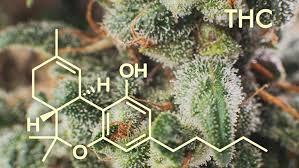
An Argument for THC Cap in Colorado

An article at The Denver Post calls for Democrats to follow science and decide on a cap on THC potency.

These concentrates are not plant material rolled in a joint. They are produced by soaking marijuana buds in chloroform, butane, and propane. Those chemicals extract and concentrate the THC from the plant into what’s called “wax” or “shatter.” With a crack pipe and a butane torch, users vaporize and inhale that THC-rich shatter. Or, as a change of pace, at a Colorado dispensary a user can just buy a 70% THC anal or vaginal suppository and insert that. These concentrates are what cause harm, and right now there are zero limits on their potency. Zero.
So what? Well, studies published in the internationally renowned medical journal The Lancet Psychiatry conclude that using products with 15% THC or higher triples the risk of psychosis, and daily use of such products quintuples that risk. In fact, 56 scientific studies have confirmed high potency THC’s connection to psychosis. In addition, a study published in The Journal of American Medicine in 2020 concluded that high potency THC “was associated with significant increases” in addiction and mental health disorders (like depression and anxiety). High potency THC is addictive. In 2017 The Journal of Psychiatric Research published a study concluding that THC addiction is “significantly associated with suicide” (especially for teens and veterans). This is the science that drove a Washington state legislator and public health professional to conclude THC concentrates have created “one of the largest emerging health crises of our time.”

In a previous article, we had looked into this argument with the conclusion that there simply needs to be much more research into what designates “too much” THC. Most can agree with a need for regulation, but where those numbers reside is up to debate. The author of the Denver Post article also backs this opinion, concluding that whatever the number, we simply follow the science.
Vermont, for instance, has created a cap of flower at 30% THC and concentrates at 60%. It will be fascinating watching this unfold and see the results come in over time.
Read full article at The Denver Post

1 69 70 71 72 73 237
Right Menu Icon