

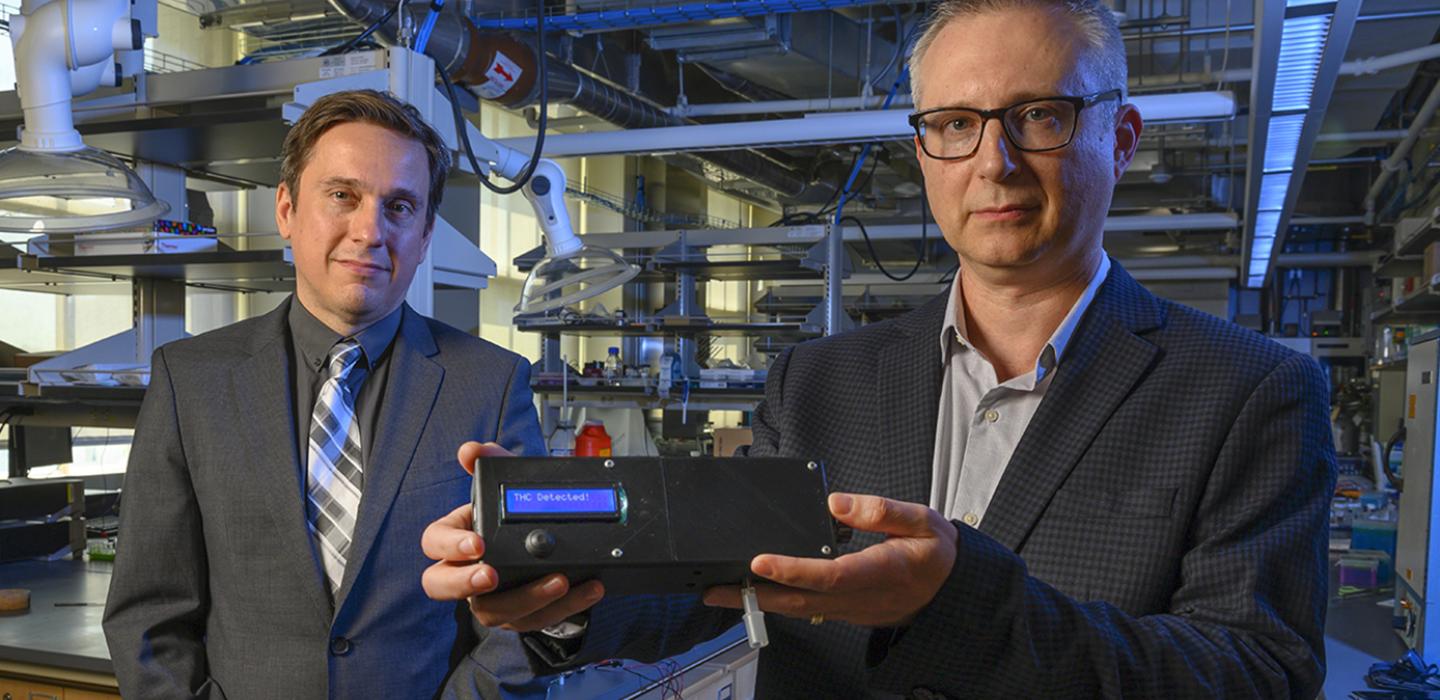
A newly published study points to a potential breakthrough in marijuana impairment testing, outlining a low-cost, portable “breathalyzer” device capable of detecting THC without the need for lab analysis—a development that could reshape roadside drug testing as cannabis legalization expands nationwide.
The research, led by Emanuele Alves of Virginia Commonwealth University, describes an experimental device resembling an asthma inhaler. Built using 3D-printed components, the prototype uses a chemical reaction to identify delta-9 THC—the primary psychoactive compound in cannabis—through a visible color change.
Partly funded by the U.S. Department of Justice, the study addresses a long-standing gap in law enforcement tools: the lack of a rapid, roadside test for marijuana impairment comparable to alcohol breathalyzers. Researchers say the need for such technology has grown more urgent as more states legalize cannabis for medical and recreational use.
The device operates using cartridges infused with a “Fast Blue” dye and gelatin mixture. When a person exhales into the mouthpiece, airborne particles interact with the cartridge. If THC is present, a colorimetric reaction produces a dark red hue. The system was able to detect cannabinoids—including THC, CBD and CBN—at levels as low as 10 to 100 nanograms, with distinct color patterns allowing researchers to differentiate between compounds.
While the findings establish what researchers call a “proof-of-concept,” additional testing and real-world validation are still required. A patent application has been filed with the U.S. Patent and Trademark Office for the proposed design.
Despite the promising results, the study enters a complex scientific and legal landscape. Agencies such as the National Institute of Standards and Technology have previously found that THC levels in breath or blood do not consistently correlate with impairment. Other federal research has similarly questioned whether a single measurement of THC can reliably indicate recent use or driving ability.
Safety officials, including the National Highway Traffic Safety Administration, have also noted limited evidence linking THC concentration directly to crash risk—unlike the well-established relationship between blood alcohol levels and impairment.
Even so, researchers say the prototype represents an important step toward more practical testing methods. As debates continue over cannabis policy, impaired driving laws and workplace drug testing, the development of accurate, on-the-spot detection tools remains a critical priority for regulators and public safety advocates alike.
Read the whole article from Marijuanamoment here.
The post New Breakthrough On 3D Printed Breathalyzer That Detects Cannabis appeared first on Weed Deep Dive.